
Why Your Brain Got Smaller While You Got Smarter
Plus: 1,000 steps after surgery, pregnancy and the brain, baby dinosaurs with better food, and a cat's perfect ear


Three of today’s stories are about brains. One explains why human brains have been shrinking for the past 11,000 years while intelligence has risen. Another reveals a pattern that has held for 70 years: not one person blind from birth has ever developed schizophrenia. A third shows that pregnancy rewires a mother’s brain in ways that are largely positive, whatever the fog of those months might suggest. I find these three together remarkable. We understand so little about what happens inside our own heads, and every week science fills in a little more.
The rest of today’s newsletter is an equally good mix: a proposed dam between Alaska and Russia, a gene that could help humans regrow lost limbs, baby dinosaurs fed better food than their parents, a 500-year-old Italian shipwreck visited by robot, a cat making a perfect one-eared mid-jump calculation, and Mark Knopfler playing Sultans of Swing.
Happy birthday, Daybreak Notes & Beans 🎂
Substack’s good-news newsletter celebrates this week its first birthday:
Today, it’s a good day for you to join:
Humans got smarter while their brains got smaller
Human brains have been getting smaller for about 11,700 years. Researchers analyzing thousands of skulls from Europe, Asia, Africa, and Australia found that brain volume dropped by roughly 10 percent since the end of the last Ice Age. At the same time, IQ scores have risen over the past century. How does a species get smarter as its brain shrinks?
Larger brains do not mean higher intelligence. Einstein’s brain was notably small. The shrinkage likely links to farming and climate. When agriculture replaced hunting, physical demands dropped. Bodies shrank too, male height falling from around 1.75 to 1.65 meters during the transition to farming. Brains followed the same trajectory.
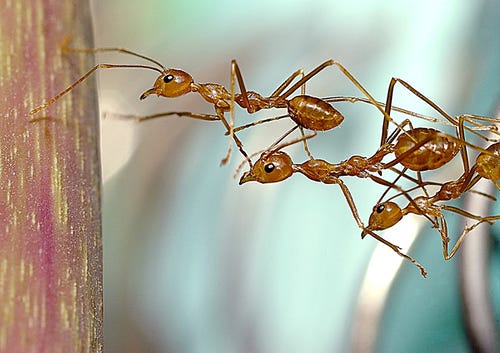
The most compelling explanation involves collective intelligence. Ant colonies develop smaller individual brains as their social systems grow more complex, and researchers believe humans have followed the same pattern. We no longer need to know how to do everything. We rely on specialists, shared knowledge, and technology. One researcher describes it as trading raw computational capacity for collective intelligence, and whether that is progress depends on how stable our shared systems remain.
Not one person blind from birth has ever developed schizophrenia
In 1950, two researchers noticed that schizophrenia appeared absent in people who were blind from birth. The finding sat ignored for decades. A 2018 study tracking nearly 500,000 children in Western Australia confirmed it. Among them, 1,870 developed schizophrenia. Not one of the 66 children with cortical blindness did. Seventy years of evidence, and not a single case has ever been reported anywhere.
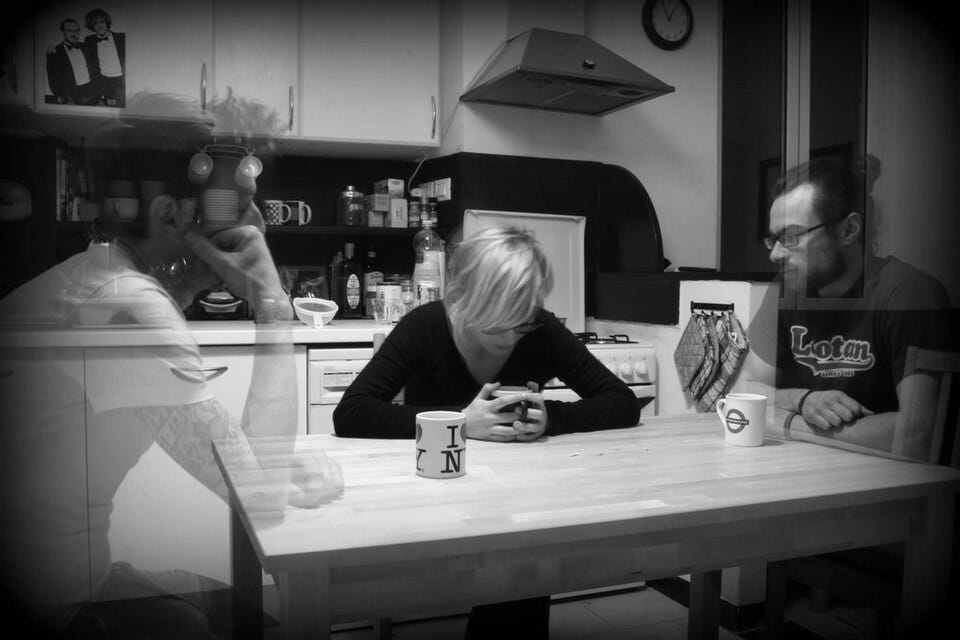
The protection applies only to cortical blindness, caused by damage to the brain’s visual cortex. Blindness from eye damage, or blindness that develops later in life, provides no protection. Researchers now understand schizophrenia partly as a disorder of prediction. The brain generates expectations and checks them against sensory input. When this misfires, weak signals carry too much weight, coincidences feel significant, and the line between imagination and reality blurs.
When the visual cortex receives no input from birth, the brain rewires it for language, memory, and reasoning. This early reorganization may produce more stable prediction patterns, reducing misfiring. No one is proposing blindness as a treatment. But the finding points toward therapies targeting how the brain interprets reality, not just the dopamine systems that current medications address.
In Daybreak Notes & Beans, I focus on stories of human ingenuity, conservation wins, art, beauty, and scientific breakthroughs that mainstream outlets often overlook. If these reflections of hope help to start your day with perspective rather than pessimism, consider supporting this work:
1,000 extra steps after surgery cuts complications by 18 percent
A study of nearly 2,000 adult surgery patients found that walking an extra 1,000 steps per day during recovery cuts the chance of complications by 18 percent, reduces 30-day hospital re-admissions by 16 percent, and shortens hospital stays by 6 percent. The findings held across different types of surgery and different health levels. Wearables tracked every step, giving doctors an objective, continuous picture of recovery for the first time.

Doctors have told patients to get up and walk after operations for years, but without any clear target. This study provides one. The researchers found that step count outperformed heart rate variability and self-reported wellness scores as a predictor of recovery. A drop in daily steps can now serve as an early warning sign, triggering physical therapy or more frequent check-ins before a setback becomes a readmission.
Professor Timothy Pawlik of Ohio State University, who led the research, put it plainly. People who feel better naturally move more, but the signal is strong enough to suggest that movement itself drives recovery, not merely reflects it. A 2023 study found that patients who took more than 7,500 steps per day before surgery had a 51 percent lower risk of postoperative complications. Getting fit before going in and moving as soon as possible afterward turns out to be both the best preparation and the best medicine.
A dam between Alaska and Russia to save Europe’s climate
Researchers at Utrecht University have proposed building a dam across the Bering Strait, the 130-kilometer stretch of water between Alaska and Russia. The reason is the Atlantic Meridional Overturning Circulation, the ocean current that includes the Gulf Stream and keeps northern Europe far warmer than its latitude would otherwise allow. Scientists have warned for years that AMOC could collapse under climate change. A collapse would plunge northern Europe into conditions no living person has experienced.

The dam would regulate cold, fresh water from the Pacific flowing into the Arctic and then into the Atlantic. That influx weakens AMOC by reducing the density differences that drive its circulation. Control it, and the system might be stabilized.
I live a short walk from the Oosterscheldekering, the great storm surge barrier on my Dutch island of Schouwen-Duiveland. I cross it regularly and have never once imagined it as inspiration for a structure spanning two continents. That this idea comes from Dutch researchers makes perfect sense. We know how to build in water. As a former diplomat, though, I can think of several other problems that will need to be solved before the first concrete is poured between those two countries.
How Chile Voted Out a Dictator in 1988: Lessons for Trump’s America
Yesterday in The Planet, I published Part 7 of "The Fall" — my series on how authoritarian regimes end. This one is about Chile in 1988, when Augusto Pinochet called a plebiscite expecting to win it, and lost. What happened that night, and what the other military commanders did when he tried to stay in power anyway, is one of the most instructive stories in modern democratic history. If you are asking whether elections can actually remove an authoritarian ruler who has spent years reshaping the state in his own image, Chile answers that question. The answer is yes. But the conditions matter enormously. Read Part 7 of The Fall here.

Scientists find the gene that could help humans regrow lost limbs
Researchers at Wake Forest University, Duke University, and the University of Wisconsin-Madison have identified a set of genes that drive limb regeneration across three very different species: axolotl salamanders, zebrafish, and mice. The discovery, published in the Proceedings of the National Academy of Sciences, points toward a possible future in which human limbs damaged by injury, diabetes, or cancer could be regrown rather than replaced by prosthetics. More than a million amputations occur globally every year.
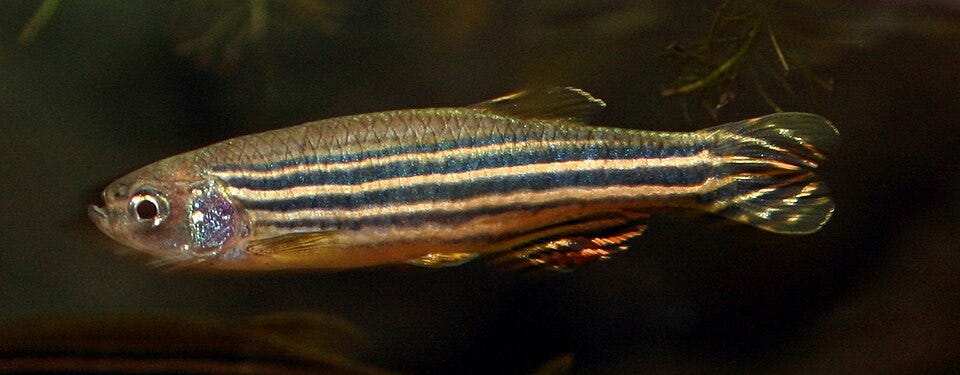
The team focused on two genes, SP6 and SP8, active in the skin tissue of all three species during regeneration. When researchers used CRISPR to remove SP8 from axolotls, the salamanders lost their ability to properly regrow limb bones. Similar problems appeared in mice missing both genes. The axolotl is remarkable for regrowing entire limbs, tails, and parts of the heart and brain. Zebrafish can repeatedly regrow damaged fins and repair the spinal cord.
The team then designed a gene therapy based on zebrafish biology and tested it in mice, partially restoring regenerative ability in damaged digits. Human limbs cannot naturally regenerate the way salamander limbs do, but researchers believe future therapies could mimic the biological mechanisms these SP genes control. The lead scientist called the result a proof of principle. The path from mice to humans is long, but the existence of shared regeneration genes across such different species is the foundation on which everything else will be built.
Pregnancy rewires mothers’ brains, and largely for the better
Researchers scanning women’s brains before, during, and after pregnancy have found changes of a magnitude rarely seen in neuroscience. Gray matter volume decreases. Cortical volume shifts. New neuron production in the hippocampus slows. To anyone who has experienced the fog of pregnancy, this sounds alarming. Scientists are clear it is not. The brain is not shrinking. It is reorganizing, the same way an adolescent brain reorganizes under the pressure of hormones and new demands.
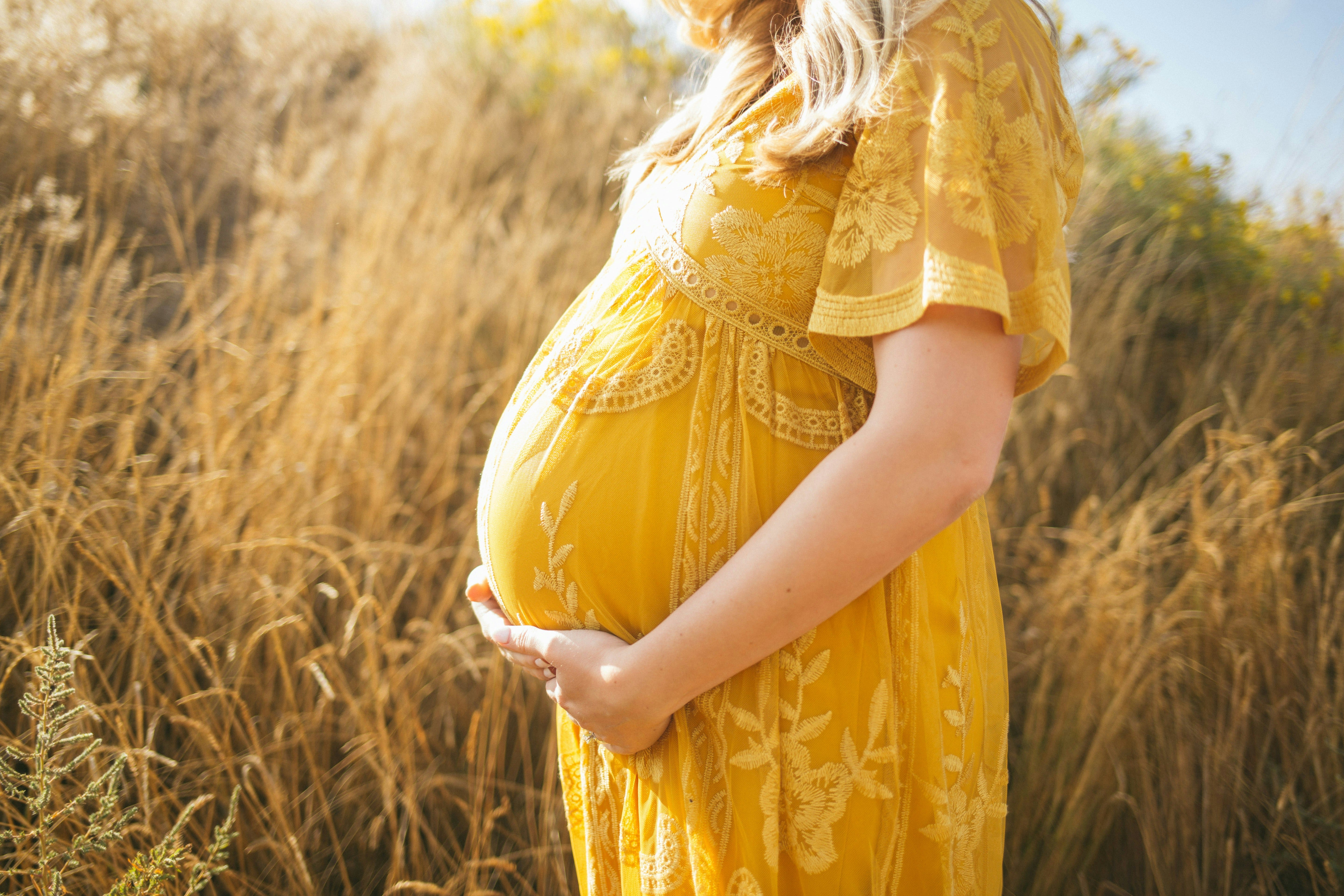
The changes appear to serve a purpose. Studies show that the greater the degree of brain remodeling, the stronger the mother-infant attachment scores. Pregnant women become better at reading fearful or distressed faces. The brain networks governing social understanding become more active and more connected. Hormones drive the whole process, surging between 100 and 1,000 times their normal levels. One neuroscientist described them as sculpting the brain, making it more attuned to the demands of a new life.
Some of these changes last. Reduced gray matter volume can persist for six years or more. Researchers in Spain, the US, the Netherlands, and Germany have found consistent results across very different populations. The brain fog that many mothers experience is real, but the underlying transformation is largely positive.
Baby dinosaurs ate better food than their parents, fossils reveal
Paleontologists at Ohio State University have found evidence that duck-billed dinosaurs fed their young more nutritious food than they ate themselves, a behavior seen today in birds whose chicks are confined to the nest after hatching. The finding comes from wear patterns on the fossilized teeth of Maiasaura peeblesorum, a large herbivorous dinosaur that lived in Montana about 75 to 80 million years ago. Juvenile teeth showed significantly more crushing wear, consistent with soft, high-protein foods like fruit. Adult teeth showed more shearing wear, consistent with tougher, high-fiber plant material.
The implication is that parent dinosaurs brought different food to their young rather than letting them forage alone. Alternatively, parents may have partially regurgitated food for their hatchlings, another behavior common in modern birds. Either way, the level of parental investment suggested by the fossil record is unusual for most species alive at that time, and pushes the origins of bird-like nurturing behavior much further back in evolutionary history than previously confirmed.
Lead researcher John Hunter put it directly. The urge for a bird to feed a youngster is a very old behavior, and this evidence suggests it may trace back to the origin of dinosaurs themselves. Maiasaura nests have long made this species a key reference point for understanding dinosaur reproduction. Now their teeth are telling us about how deeply social these animals really were.
In Daybreak Notes & Beans, I focus on stories of human ingenuity, conservation wins, art, beauty, and scientific breakthroughs that mainstream outlets often overlook. If these reflections of hope help to start your day with perspective rather than pessimism, consider supporting this work:
A robot finds a 500-year-old Italian shipwreck and some beer cans
Off the coast of southern France near Ramatuelle, French navy archaeologists sent a remotely operated robot 2,500 meters down into the Mediterranean, the deepest shipwreck in French territorial waters. What the cameras found was extraordinary. Hundreds of ornately decorated ceramics, jars, and jugs were scattered across the seafloor, their bold blue and yellow geometric designs still intact after five centuries. Six cannons, an anchor, and twelve cauldrons were also visible. One ceramic bore the first three Greek letters of Christ’s name.
The vessel, officially named Camarat 4, dates to the 16th century and originated somewhere in northern Italy. Where it was heading and what sank it remain unknown. The robot captured nearly 67,000 images at eight frames per second, which will be assembled into a 3D model of the wreck. Three pitchers and a plate were recovered using the robot’s pincers, a delicate operation given the age and fragility of the objects. The site had been completely untouched by looters or previous explorers. Its depth made that impossible until now.
But modern humanity still found a way to leave its mark. Alongside the cannons and 500-year-old ceramics, the cameras spotted beer cans, plastic containers, and old fishing nets. The director of France’s underwater archaeology department described the moment well: after the awe of the discovery comes the sadness of finding such things.
A moment of science
A cat mid-jump spots a table edge on its left side. Without breaking stride, it folds only its left ear flat against its skull, clears the obstacle by millimeters, and lands perfectly. The other ear stays exactly where it was. The cat folds only the one that would otherwise hit the table.
Cats have around 32 muscles controlling each ear and can move them independently. In most situations, those ears swivel outward to catch sound from every direction. But the brain can override that in an instant, making a precise, asymmetric adjustment based on real-time spatial calculation. One ear needs to fold. Only that ear folds.
This is part of a wider coordination system. Cats use their whiskers to gauge width before committing to a move, their inner ear to maintain balance mid-flight, and their eyes to track the landing point simultaneously. The ear fold is one small signal from a system so precise and so fast that it looks effortless. In cats, it genuinely is.
A moment of beauty
Mark Knopfler almost never uses a pick. He plays with his fingers, and the sound he gets is unlike anything else. I grew up listening to Dire Straits and have never stopped. This video shows why.
In this extended live version of Sultans of Swing, the singing stops, and Knopfler simply plays. The other musicians provide quiet accompaniment. The rest is just the man and the guitar. Written in 1978. A classic in every sense that matters.
Stay inspired,
Alexander
Daybreak Notes & Beans is different. While most news is often depressing these days, this newsletter brings you stories that inspire and make you smile.
Subscribe to receive daily hope in your inbox, access our full archive, and join a progressive community that believes good news matters.
🧭 Morning Compass
This morning, I published today’s Morning Compass in the More newsletter. This is the best way to quickly catch up on the more serious news that’s going on during your first coffee. As a reader of Daybreak Notes & Beans, you know that the positive news ends up in the newsletter you are reading right now.
This morning, I published in Morning Compass:

Screen Skills
One of my other newsletters, Screen Skills, provides practical digital advice in plain language. It is a tech newsletter for non-tech people.
Did you, like me, learn typing on a classic typewriter?
Is computer technology not your hobby, but do you feel you need to know the basics?
Do you find it hard to keep up with every new update on your phone?
Screen Skills keeps things simple, always starts at the basics, and makes your digital life easier in just a few minutes a week.
Earlier today, I published:


The Planet
Yesterday, I published:

The Curious Wanderer
On Saturday, I published:

Notes
Shrinking brains: Live Science, “If humans are getting smarter, why are our brains shrinking?” — https://www.livescience.com/archaeology/human-evolution/if-humans-are-getting-smarter-why-are-our-brains-shrinking
Blindness and schizophrenia: The Conversation, “People who are blind from birth never develop schizophrenia” — https://theconversation.com/people-who-are-blind-from-birth-never-develop-schizophrenia-what-this-tells-us-about-the-psychiatric-condition-281369
Surgery and walking: Good News Network, “Walking an Extra 1,000 Steps a Day After Surgery Helps Patients Recover Quicker” — https://www.goodnewsnetwork.org/walking-an-extra-1000-steps-a-day-after-surgery-helps-patients-recover-quicker/
Bering Strait dam: New Scientist, “A vast dam across the Bering Strait could stop the AMOC collapsing” — https://www.newscientist.com/article/2525888-a-vast-dam-across-the-bering-strait-could-stop-the-amoc-collapsing/
Limb regrowth gene: ScienceDaily, “Scientists found the holy grail gene that could one day help humans regrow limbs” — https://www.sciencedaily.com/releases/2026/05/260508003121.htm
Pregnancy and the brain: Smithsonian Magazine, “Pregnancy Changes Mothers’ Brains. These Recent Discoveries Are Showing Us How” — https://www.smithsonianmag.com/science-nature/pregnancy-changes-mothers-brains-these-recent-discoveries-are-showing-us-how-180988713/
Dinosaur parenting: Ohio State News, “Dinosaur dental fossils reveal bird-like parental care bonds” — https://news.osu.edu/dinosaur-dental-fossils-reveal-bird-like-parental-care-bonds/
Mediterranean shipwreck: Popular Science, “Robot probes 16th century Italian shipwreck 1.5 miles below the Mediterranean” — https://www.popsci.com/technology/shipwreck-mediterranean-france-robot/
Cat video via IG
Mark Knopfler / Sultans of Swing: IG rockmusic.in
"Researchers now understand schizophrenia partly as a disorder of prediction."
This is compelling information and I wish for a remedy to result. Many of my homeless neighbors deal with the enormous challenge of managing schizophrenia while living on the street.
Mark Knopfler's great talent and helping produce that great sound are his great tools: a '61 Strat and a '57 Les Paul 🎸
A science-filled Daybreak celebrating an exciting first year
☕🎂
Thanks Alexander. Like you I have never stopped loving Mark Knopfler's work. Brothers In Arms is the one that always always touches my heart. Thank you for your wonderful work too.