
Your Dog or Cat Really Does Know When You're Having a Bad Day
Plus: clean energy crosses a historic 2025 threshold, Rome's fall rewritten by DNA, oak trees with memory, and a horse who plays guitar with his muzzle

Luna is on the chair beside me as I write this, watching. She does that when I am tired. She also seems to know, before I have touched a single bag, when I am about to travel. This morning’s first story has some answers about that bond.
Today: a French study on what your pet is actually doing for your health. Clean energy is crossing a historic threshold. Ancient DNA rewriting what we know about Rome’s fall. A tiny frozen world beyond Pluto with an atmosphere. Oak trees that turn out to have a kind of memory. The Pergamon Altar is finally returning. Prehistoric copper miners. A warning about what is under your bed. And two videos worth watching.
Your dog knows when you’re having a bad day
Luna is sitting across from me right now, watching. She does that when I am tired or distracted, not when I am working normally. She also seems to sense when I am about to travel, even before I have packed anything.
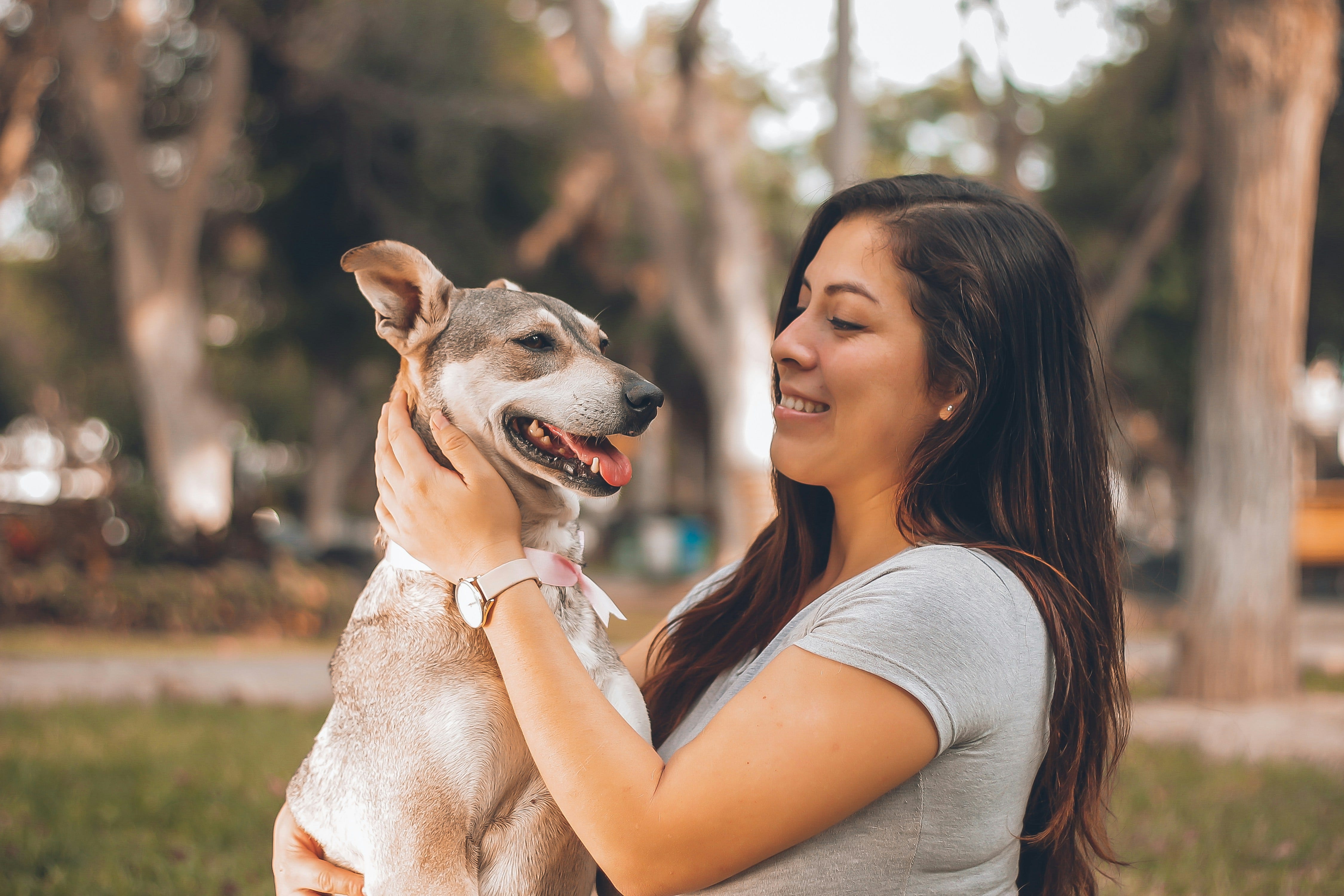
A French study has now put numbers on what pet owners have always sensed. Their animals know how they are doing, and this two-way bond has real health consequences. Researchers at the National Veterinary School of Toulouse surveyed nearly 1,900 dog and cat owners using a 23-question emotional attachment scale. Dog owners walk more, experience less depression, and maintain stronger social connections. Among elderly people, a pet preserves cognitive function and morale. In children, the relationship builds empathy.
Dog owners scored 58.5 out of 69 on the scale. Cat owners scored 52. Both beat results from England, Denmark, and Austria. Women scored higher than men. People without children attached more strongly, often treating pets as substitute family. The research has practical applications already. French police stations have introduced kittens to calm victims of violence. Specially trained animals accompany children through cancer treatment. Canadian studies show dogs in police workplaces reduce officer stress. This bond is not sentiment. It is documented therapy.
Clean energy outpaced global electricity demand for the first time in 2025
For years, solar and wind energy grew fast but never quite fast enough. Global electricity demand continued to expand faster, meaning fossil fuels remained in the mix regardless of how many turbines or panels went up. In 2025, that changed.
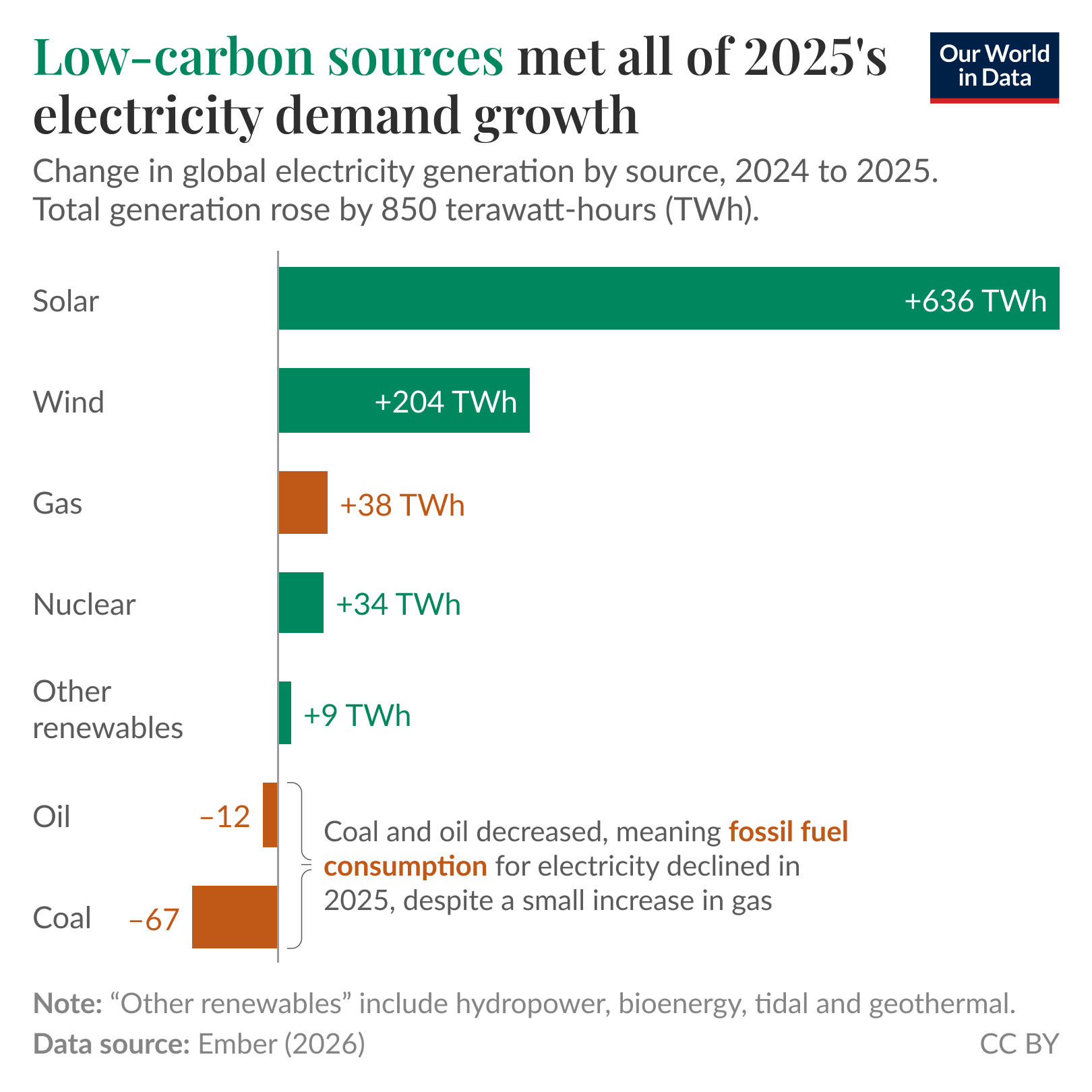
According to Ember’s Global Electricity Review, low-carbon sources met all 850 terawatt-hours of new electricity demand added last year. Solar and wind accounted for nearly all of that growth, with solar contributing roughly 636 terawatt-hours and wind about 204. Coal and oil both declined in absolute terms. Gas edged up slightly, but not enough to offset those losses.
In all my years speaking about climate change, I always stressed one point when the renewable energy graphs came up. More solar and wind was never the goal in itself. The goal was producing enough clean energy to actively displace fossil fuels, to push coal and oil out of the mix in absolute terms, not just reduce their share. The power sector crossed that line in 2025. The harder challenge now is extending that momentum to heating, transport, and industry, where fossil fuels are far more difficult to displace. But the power sector just proved it is possible.
Daybreak Notes & Beans is different. While most news is often depressing these days, this newsletter brings you stories that inspire and make you smile. Subscribe to receive daily hope in your inbox, access our full archive, and join a progressive community that believes good news matters.
The fall of Rome was a slow mix, not a barbarian flood
Ancient DNA from 258 graves along Rome’s old northern frontier in southern Germany has overturned one of history’s most persistent images. Researchers from Johannes Gutenberg University Mainz analyzed genomes from cemeteries dating between 400 and 700 AD and found no evidence of a sudden mass invasion. Instead, people of northern European and Roman provincial ancestry began gradually intermarrying around 470 AD, roughly when imperial power weakened enough to loosen the structures that had kept them apart.
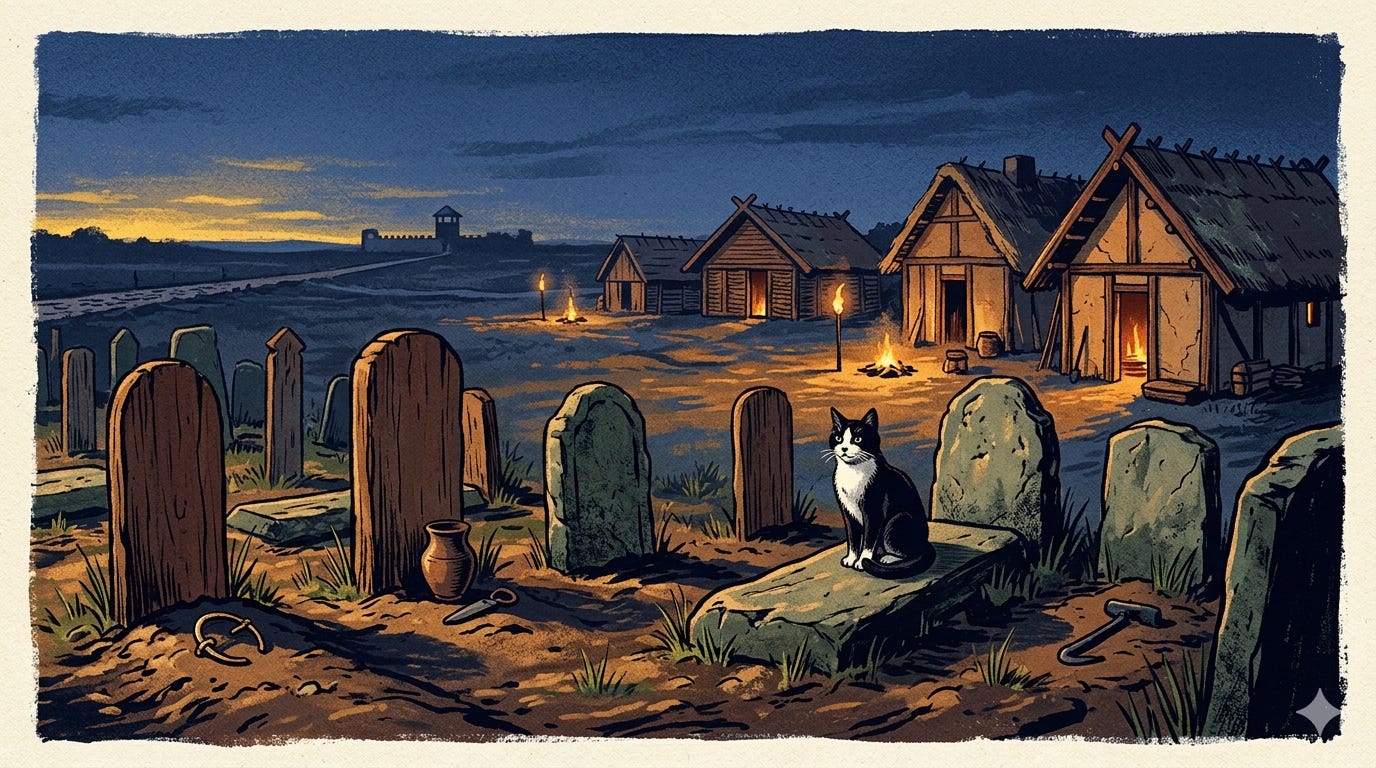
The decisive shift tracks precisely with Rome’s decline. Before 470, burial sites near Altheim in Bavaria show distinct genetic clusters. After 470, Roman provincial ancestry from central Italy, the Balkans, and Britain begins to appear in rural communities. The shift came not from a conquering horde but from freed laborers, displaced families, and individuals seeking new lives in a world where old institutions no longer held them in place.
By the early seventh century, the genetic profile of those communities had begun to resemble that of modern central Europeans. It took about 150 years. Family structure, Christian customs, and Roman legal habits survived the fall of the empire and were adopted by communities that later historians called Germanic. As one researcher put it, late antiquity was not finished. It was transforming.
The smallest world with an atmosphere
A frozen object in the outer solar system, just 300 miles across, appears to have a thin global atmosphere. That is the finding from a team at Japan’s National Astronomical Observatory, who caught the object passing in front of a background star in 2024 and watched the starlight dim in ways that only an atmosphere can explain.
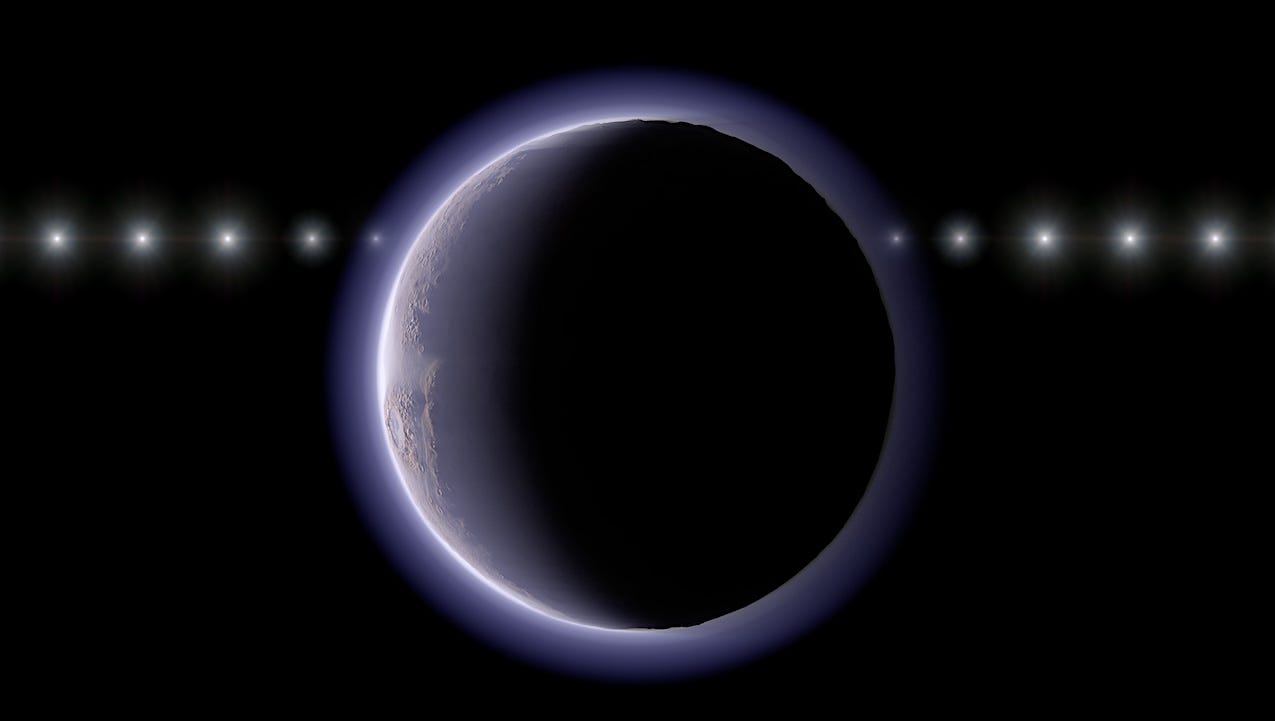
The object, formally known as 2002 XV93, sits more than 3.4 billion miles from Earth, farther than Pluto. Its atmosphere is 50 to 100 times thinner than Pluto’s already faint atmosphere, and roughly five to ten million times thinner than Earth’s. The most likely gases are methane, nitrogen, or carbon monoxide. How the atmosphere formed remains unclear. Researchers suspect either volcanic activity beneath the ice or a comet strike that released frozen gases.
The find matters because objects this small were not thought capable of holding an atmosphere at all. The assumption was that only large planets, dwarf planets, and some moons could manage it. NASA’s Webb Space Telescope may now be able to confirm the composition. If the atmosphere fades over the next few years, a comet impact was probably responsible. If it persists, ice volcanoes become the more likely explanation.
The American who saved Orwell, and what he knew about fascism before America did
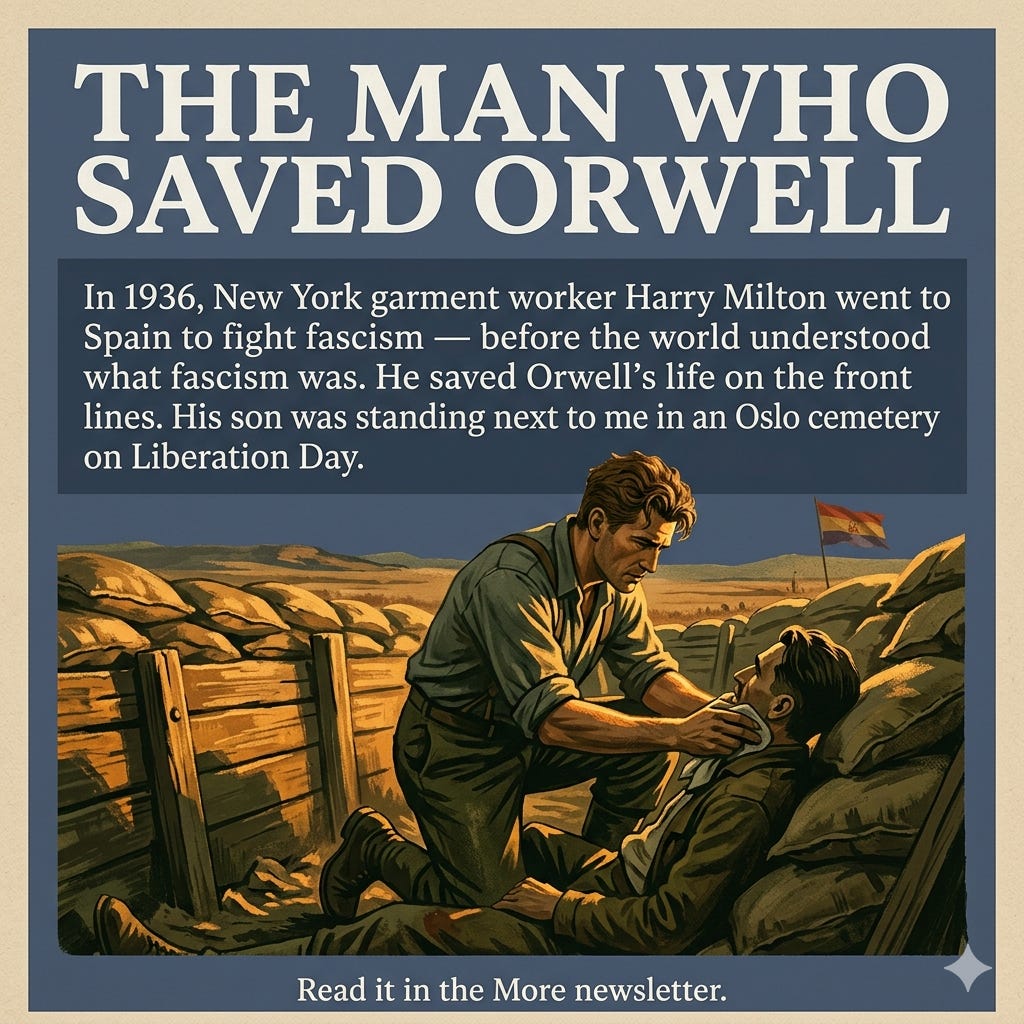
Today is May 5th, Liberation Day in the Netherlands. In my other newsletter, More, I am publishing something unusual today: the story of the American who saved George Orwell's life during the Spanish Civil War, and what I learned when I met his son yesterday at a Dutch war cemetery in Oslo. It is a story about fascism, about early warning, and about the people who understood what was coming before the governments did. If that sounds like your kind of reading, More is the place to find it.
Subscribe today for More, with 20% off for the first year:

Oak trees remember last year’s caterpillars and fight back
Oak trees can remember a bad year and adjust their behavior the following spring. Researchers at the University of Würzburg monitored 137,500 individual trees across a 2,400-square-kilometer area of northern Bavaria using radar satellites, tracking canopy conditions over five years. When caterpillars stripped a tree bare in a given year, that tree delayed its leaf emergence by three days the following spring.
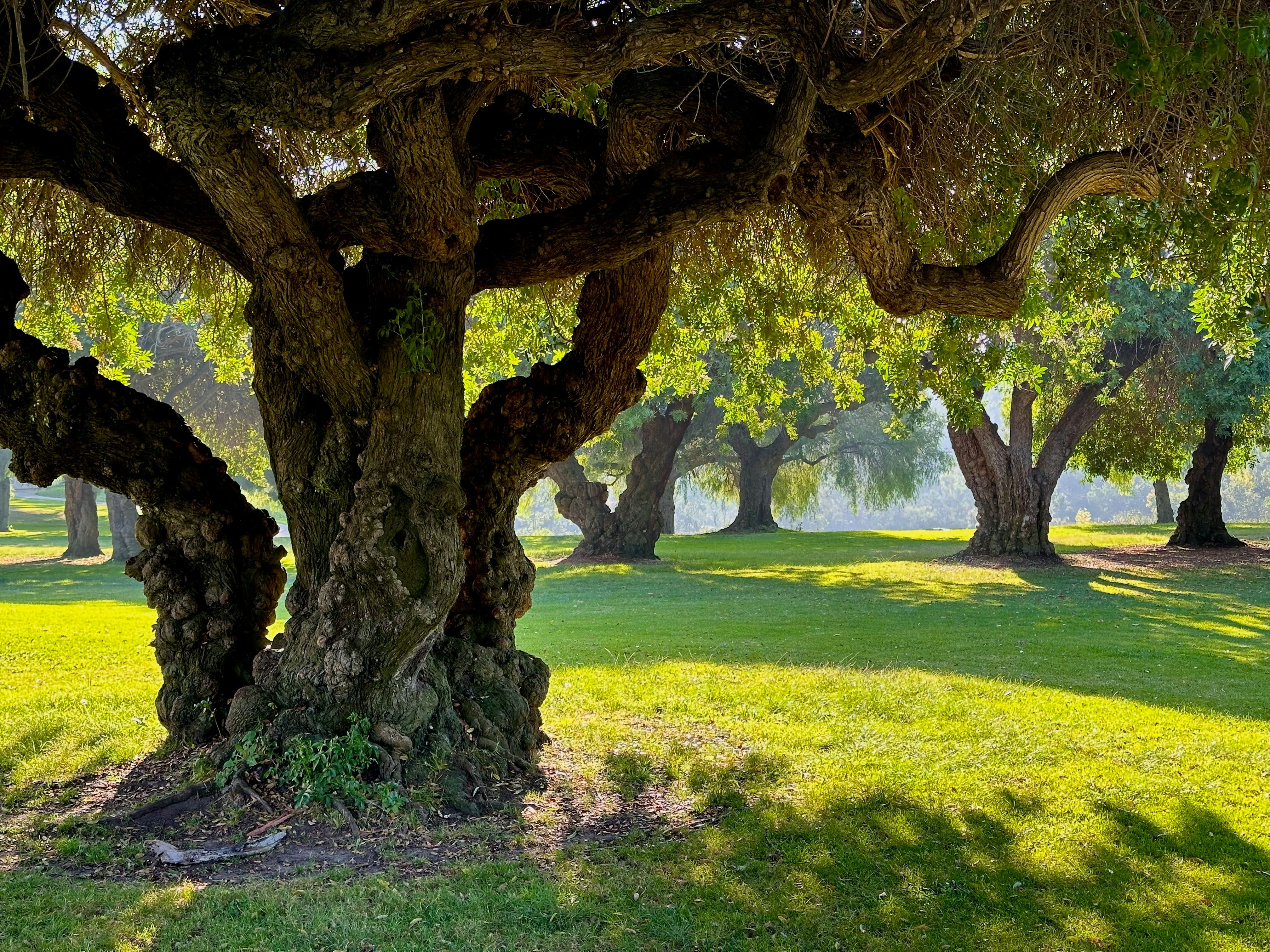
Three days sounds modest. It is not. Caterpillars hatch precisely when young oak leaves are at their most nutritious, soft enough to eat before the tree’s chemical defenses fully develop. A three-day delay means the caterpillars emerge to find closed buds. The larvae starve, and the damage to the tree drops by 55 percent.
The 2019 gypsy moth outbreak in Bavaria proved particularly instructive. Satellite data showed exactly which trees were stripped bare, and the following spring, those same trees held back while their neighbors did not. The trees are not passively responding to temperature. They are reading the biological threat and timing their response accordingly. Of all the discoveries I share with you, this one stops me every time I think about it. Trees have a kind of memory. Who would have thought?
The Pergamon Altar returns in 2027 after more than a decade in hiding
Berlin’s Pergamon Museum will reopen on June 4, 2027, ending a closure that has kept one of the ancient world’s most extraordinary objects out of public view since 2014. The centerpiece is the Pergamon Altar, a massive second-century BC marble structure built between 197 and 156 BC in what is now Bergama, Turkey. Its frieze depicts the battle between gods and giants in carving so detailed and dramatic that generations of art historians have struggled to find comparisons.
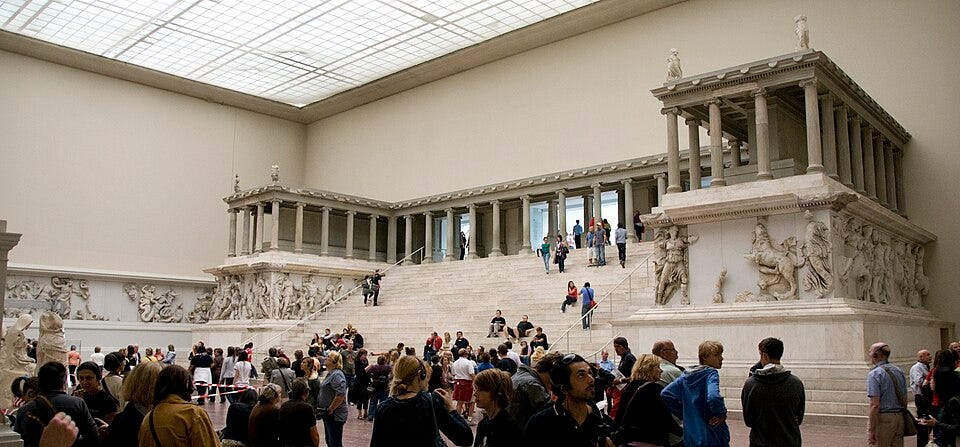
The museum itself closed completely in October 2023 as part of a broader restoration of Museum Island, Berlin’s neoclassical museum complex built between 1830 and 1930 and listed as a UNESCO World Heritage site. East Germany never fully repaired the wartime damage the island suffered, leaving the restoration work to accumulate across decades. Three of the five museums on the island have already been completed.
The 2027 reopening will be partial. The wing containing Babylon’s Ishtar Gate remains closed until the full restoration finishes in 2037. Visitors next year will get the altar back, which for most people is reason enough to make the trip. This is firmly on my bucket list, and I suspect I am not alone among readers in that.
Prehistoric copper miners worked the Pyrenees for 4,000 years
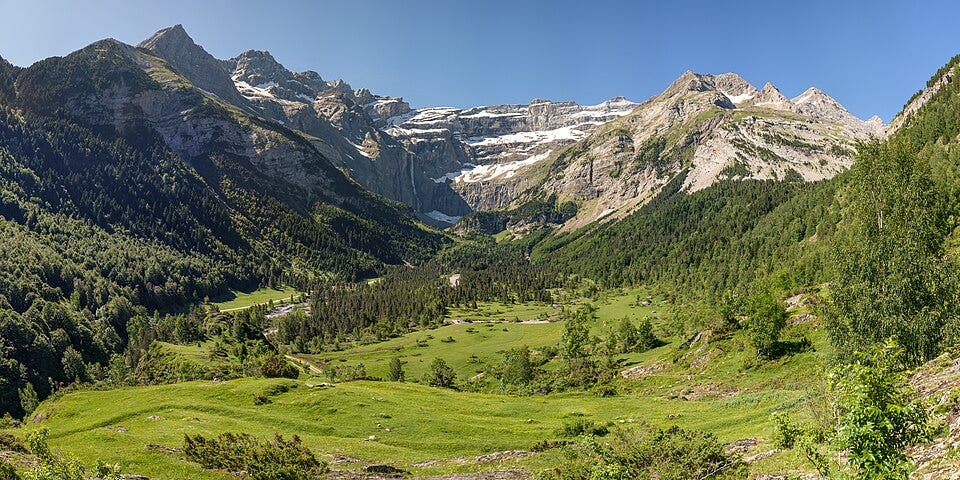
A cave in the Spanish Pyrenees, discovered at 7,333 feet above sea level in the province of Girona, has produced evidence of repeated copper processing going back to around 5000 BC. Archaeologists from the Autonomous University of Barcelona found nearly 200 fragments of green mineral, almost certainly malachite, alongside dozens of prehistoric fireplaces, human remains, animal bones, and broken ceramic vessels.
The process was straightforward but demanding. Malachite, when heated over charcoal, releases carbon dioxide and leaves behind copper oxide. Heat the oxide again with more charcoal, and a small copper nugget remains. The cave’s firepit arrangement, and the fact that many mineral fragments show heat damage while surrounding materials do not, point to deliberate, repeated processing rather than accidental burning.
What makes the site unusual is the duration. People returned to this seasonal mountain camp over more than four millennia, meaning knowledge of the location and its copper deposits passed from generation to generation for roughly 160 human lifespans. The researchers note that the Pyrenees were clearly not a remote backwater for prehistoric communities. They were a working landscape, with routes, resources, and memory embedded in the rock. Excavations continue, and confirmation of the mineral as malachite is expected in the coming years.
What you store under your bed may be ruining your sleep
The space under a bed ranks among the dustiest in any home. Skin cells, fabric fibers, and pet dander settle on floors and drift underneath, where they accumulate undisturbed. Add stored items and the problem compounds. Pest removal specialists and sleep researchers have identified seven categories of stored items that reliably attract dust mites, insects, and in some cases rodents.
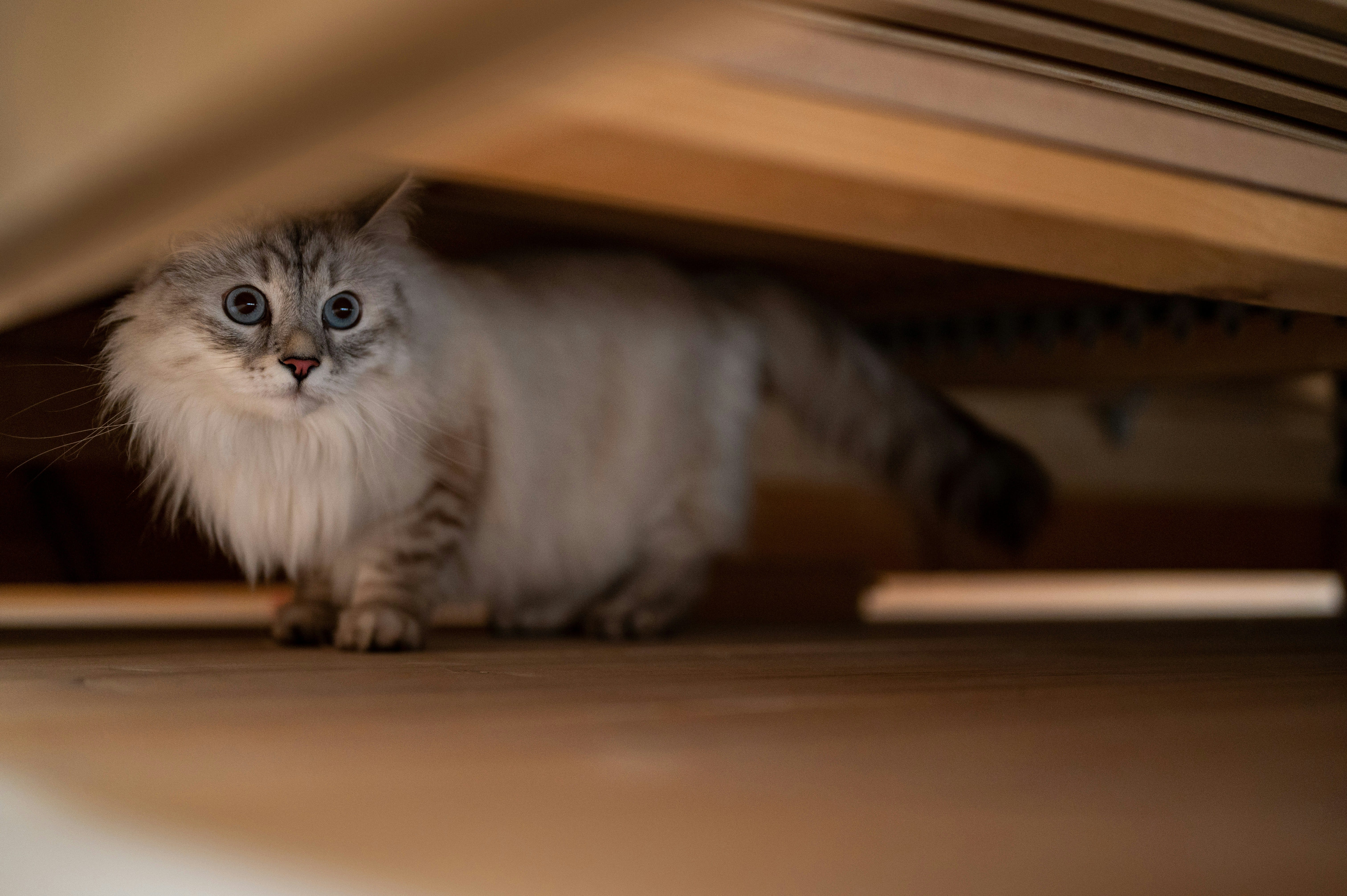
Cardboard tops the list. Its corrugated structure mimics the tight gaps bed bugs favor, and paper absorbs moisture, creating the warm, humid conditions that mites and other pests need. Natural fabrics, including wool, cotton, silk, and cashmere, feed carpet moths. Leather retains animal scent and, as it dries out in dusty conditions, begins to crack. Shoes carry an average of 421,000 bacteria per sole, according to research from the University of Arizona. Pet beds accumulate hair, dander, saliva, and food debris.
Dust mite droppings, not the mites themselves, trigger allergic reactions including rhinitis, eczema, and asthma. Those reactions disturb sleep. The practical fix is straightforward. Store only seasonal items in sealed hard containers, vacuum the space every two weeks with a HEPA-filtered vacuum, and keep the room well-ventilated. For me, it is simple. I keep nothing under the bed, and the window stays open at night. That is it.
A moment of science
Hermit crabs do not grow their own shells. They borrow them and upgrade as they get bigger, spending their lives searching for a better fit. What you rarely see is how the crab actually gets in. This video, shot using a transparent glass shell, shows the full process. The crab backs in carefully, curling its soft abdomen into the shell's spiral and anchoring itself with specialized appendages at the tip. The abdomen is asymmetrical, shaped specifically to match the spiral of a gastropod shell. Without that borrowed armor, the crab is almost entirely defenseless. The fit has to be precise. Too loose, and the shell offers poor protection. Too tight, and the crab cannot withdraw fully. Watch it once, and you will never look at a hermit crab the same way again.
A moment of beauty
Yupia is a rescue horse at an equine nonprofit in Moorpark, California. Mikayla Khramov, a musician and volunteer, earned his trust slowly, through music. Now, when she plays guitar, he leans in and strums the strings with his muzzle. Their duets have gone quietly viral. Watch it here:
Stay inspired,
Alexander
Daybreak Notes & Beans is different. While most news is often depressing these days, this newsletter brings you stories that inspire and make you smile.
Subscribe to receive daily hope in your inbox, access our full archive, and join a progressive community that believes good news matters.
Still here?
How authoritarian regimes end
On Sunday, in The Planet, I published Part 6 of “The Fall,” the series examining how authoritarian regimes end. This one is about Romania in 1989.


Screen Skills
One of my other newsletters, Screen Skills, provides practical digital advice in plain language. It is a tech newsletter for non-tech people.
Did you, like me, learn typing on a classic typewriter?
Is computer technology not your hobby, but do you feel you need to know the basics?
Do you find it hard to keep up with every new update on your phone?
Screen Skills keeps things simple, always starts at the basics, and makes your digital life easier in just a few minutes a week.

More:
I already introduced it. Here is another recent article:
The Curious Wanderer:
Travel writing, trail photography, and more personal updates from wherever I happen to be. This one is not like my regular newsletters; here you’ll find articles I used to publish only for my small, supportive community on Patreon. It’s the most personal of all my channels.

Or perhaps you enjoyed the newsletter and would like to support my writing by buying me a coffee?
My travel writing has moved to Substack. I used to publish these stories on Patreon, but Substack is simply easier to work with, and I prefer having all my publications in one place. As I already mentioned, you can find my “Patreon” travel stories in The Curious Wanderer, where I am currently publishing a series about walking Portugal’s Fisherman’s Trail.
My Patreon account remains open for all who prefer to support me on that platform rather than on Substack. You are very welcome there too:
Notes and sources
Pets and mental health: The Conversation, ‘The truth about cats and dogs and the links between pet attachment and mental health’ - https://theconversation.com/the-truth-about-cats-and-dogs-and-the-links-between-pet-attachment-and-mental-health-281046
Clean energy: Our World in Data, ‘Low-carbon electricity sources grew faster than demand in 2025, pushing fossil fuels into decline’ - https://ourworldindata.org/data-insights/low-carbon-electricity-sources-grew-faster-than-demand-in-2025-pushing-fossil-fuels-into-decline
Fall of Rome: ZME Science, ‘Ancient DNA Reveals What Actually Happened to Ordinary Europeans After the Western Roman Empire Fell’ - https://www.zmescience.com/science/archaeology/ancient-dna-europe-populations-fall-rome/
Mini Pluto atmosphere: AP News, ‘Astronomers detect an atmosphere around a mini Pluto’ - https://apnews.com/article/pluto-atmosphere-kuiper-belt-c6b0ec2e0631f47c25ce18479b14e1ed
Oak trees: Good News Network, ‘Oak Trees Will Delay Sprouting Leaves to Avoid Hungry Caterpillars That Devoured the Trees in Previous Year’ - https://www.goodnewsnetwork.org/oak-trees-will-delay-sprouting-leaves-to-avoid-hungry-caterpillars-that-ate-the-trees-last-year-study/
Pergamon Museum: AP News, ‘Berlin’s Pergamon Museum will reopen next year’ - https://apnews.com/article/germany-berlin-pergamon-museum-reopening-2027-altar-961443688a26ce54414a2857b3e95c3d
Pyrenees copper: Live Science, ‘Mysterious green rocks in Pyrenees cave hint that prehistoric people were working copper there for 4,000 years’ - https://www.livescience.com/archaeology/mysterious-green-rocks-in-pyrenees-cave-hint-that-prehistoric-people-were-working-copper-there-for-4-000-years
Under your bed: inkl.com - https://www.inkl.com/a/BNWAjAIGxAP
Hermit crab video: @fritzaquatics on Instagram
Horse and guitar: @truthache68
Many of us, myself included, believe the animals in our life are family. We have managed to change language in state laws describing animals as family rather than property. The bond was revealed to me when, as a child, I fell from a tree, couldn't breathe, and the collie next door stayed with me till I recovered 🐕
Trees reading a threat and timing their response. Fascinating 🌳
Nothing under my bed but a kitty during a storm. Upon moving in, I sprinkle diatomaceous earth along baseboards. No pesticides, no creatures 🪳
I love Yupia the musical horse! Hermit crabs are pals and I bring them mobile homes.
☕
A fascinating collection of stories, all great. But clean energy, prehistoric copper miner and underbed storage are all attention getters for me. Guilty on the underbed storage.
I fully agree with dogs having a special sense about their humans.
The hermit crab story in Moment of Science is really interesting and Moment of Beauty is indeed beautiful.
But you know the oak trees drew me like a magnet. Love it.
Thank you for another wonderful read.